विशेष लेख
How Graffiti Shaped Urban Culture
Across cities worldwide, graffiti and street art have redefined the way we experience public spaces, turning ordinary walls into dynamic visual stories. Though traces of graffiti date back to ancient Rome, it wasn’t until the 1960s in New York City that the modern form emerged, reflecting the lives, struggles, and identities of local communities.
Zoe Harper
लेखक
लेख परिचय
नीचे पूरा लेख पढ़ें।
अनुभाग
समाचार
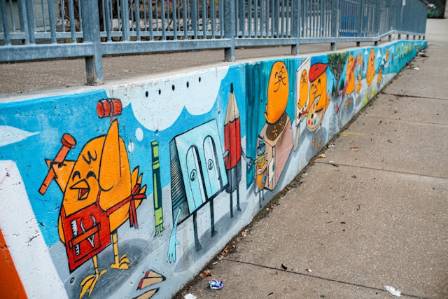
Across cities worldwide, graffiti and street art have redefined the way we experience public spaces, turning ordinary walls into dynamic visual stories. Though traces of graffiti date back to ancient Rome, it wasn’t until the 1960s in New York City that the modern form emerged, reflecting the lives, struggles, and identities of local communities.
From its beginnings as a largely unaccepted form of expression, graffiti has evolved into a recognized art movement. How did this rebellious practice earn a place in the world of high art? Let’s explore the journey from urban tagging to celebrated street artistry.
The Birth of Graffiti
Modern graffiti took shape in the 1960s and 1970s, particularly in New York and Philadelphia. Young artists, equipped with spray cans, began marking subway cars and buildings with their names and elaborate designs. These “writers” sought to make their presence felt in an increasingly urbanized environment, using public spaces as a canvas for self-expression.
The emergence of hip-hop culture in the 1970s solidified graffiti’s role as a symbol of urban identity. Alongside breakdancing, DJing, and rapping, graffiti offered marginalized communities a platform to convey their frustrations, aspirations, and pride in their culture.
Artists like Jean-Michel Basquiat helped elevate graffiti from street-level tagging to the status of contemporary art. David Bellingham, Program Director of MA Art Business at Sotheby’s Institute of Art, notes that Basquiat’s work, including appearances in mainstream media like the 1981 Rapture music video, positioned street art alongside recognized high-cultural forms.
Graffiti vs. Street Art
While often used interchangeably, graffiti and street art differ in focus and intent. Graffiti usually emphasizes stylized lettering, tags, or symbols, highlighting the artist’s identity or group affiliation. Spray paint and markers are common tools, and visibility is often a key concern.
Street art, by contrast, is broader in scope. It includes murals, stencils, wheatpaste posters, and public installations. Street art frequently engages with social or political themes and may be created with property owners’ consent, aiming to communicate with the public rather than solely assert the artist’s presence.
Graffiti’s Rise to Recognition
During the 1970s and 1980s, graffiti was widely viewed as vandalism, prompting cities to implement strict anti-graffiti measures. Despite this, collectors and galleries began to see the cultural and aesthetic value in the movement.
Artists like Basquiat and Keith Haring bridged the gap between streets and galleries, merging graffiti’s raw style with contemporary art practices. Haring, for instance, also popularized street art through everyday objects like sketchbooks and pencil cases, blending accessibility with artistic expression, as Bellingham points out.
Gradually, graffiti’s bold visuals and unfiltered energy came to symbolize urban creativity, inspiring new generations of street artists globally.

Influential Graffiti and Street Artists
Jean-Michel Basquiat: Under the alias SAMO, Basquiat, alongside Al Diaz, tagged New York’s East Village and SoHo with cryptic messages. His work fused graffiti energy with commentary on race, identity, and power, eventually crossing into galleries and collaborating with Andy Warhol.
Keith Haring: Emerging in the 1980s, Haring translated the aesthetics of subway graffiti into public art. His bold, iconic motifs, like radiant babies and dancing figures, often addressed social issues including AIDS, apartheid, and LGBTQ+ rights.
Other notable figures include:
Banksy: Famous for satirical stencils critiquing political and social systems.
Shepard Fairey: Creator of the Obey campaign and the Obama “Hope” poster, blending graphic art with public messaging.
Dondi White: Revolutionized graffiti through complex lettering and vivid color schemes.
Futura 2000: Innovator of abstract graffiti, merging text and imagery in commercial and artistic collaborations.
Lady Pink: A pioneering female graffiti artist whose murals celebrate spirituality and femininity.
Graffiti and Street Art in Modern Cities
Today, graffiti and street art coexist as both cultural expressions and tourist attractions. While graffiti often maintains its underground roots, street art has gained mainstream acceptance, with cities commissioning murals and hosting festivals.
Global examples:
Los Angeles, CA: Venice Public Art Walls offer a sanctioned space for artists to showcase their work legally.
Miami, FL: Wynwood Walls turned a former industrial zone into a vibrant, international outdoor gallery.
London, UK: Brick Lane, Camden, and Shoreditch display evolving street art, featuring works by Banksy and Stik.
Paris, France: Neighborhoods like Belleville and Oberkampf highlight murals that reflect cultural diversity and social commentary.
Amsterdam, Netherlands: Street Art Museum Amsterdam documents graffiti’s journey from subculture to mainstream art.
Berlin, Germany: The East Side Gallery transforms remnants of the Berlin Wall into a monumental canvas for murals celebrating freedom and unity.
From New York streets to global urban landscapes, graffiti has redefined public space, challenging conventions around art, property, and accessibility. Its evolution into street art demonstrates how rebellious creativity can shape culture and society.
यह भी पढ़ें

ड्यूबीकार्स कार स्पॉटलाइट — वोल्क्सवागन बीटल का इतिहास, पीढ़ियाँ, मॉडल्स और अधिक: एक प्रतीक का विकास
रोहन

Vintage Color Palettes in Colored Pencil
Jordan Cross

अपनी व्यक्तिगत शैली के लिए आदर्श ब्रेसलेट खोजें
भावना कोचर

समुद्र के शांतिपूर्ण कैनवास
एलेना मॉरिसन

हॉट एयर बैलून यात्रा की संपूर्ण मार्गदर्शिका: उपयोगी टिप्स और सर्वोत्तम गंतव्य
तन्या

SpaceX Starship: The Spacecraft Designed for the Moon
Chloe Parker