विशेष लेख
Simple Homemade Strawberry Daifuku: A Guide to the Perfect Japanese Treat
Daifuku is a cherished Japanese confection often enjoyed during festive occasions like Hinamatsuri (Girls' Day) in March or Children's Day in May. However, its delightful combination of soft rice cake and sweet filling makes it a wonderful dessert for any celebration throughout the year. This guide provides a straightforward method for creating these elegant treats in your own kitchen, blending traditional flavors with a modern, easy-to-follow process.
Colton Hayes
लेखक
लेख परिचय
नीचे पूरा लेख पढ़ें।
अनुभाग
समाचार

Daifuku is a cherished Japanese confection often enjoyed during festive occasions like Hinamatsuri (Girls' Day) in March or Children's Day in May. However, its delightful combination of soft rice cake and sweet filling makes it a wonderful dessert for any celebration throughout the year. This guide provides a straightforward method for creating these elegant treats in your own kitchen, blending traditional flavors with a modern, easy-to-follow process.
Essential Components for Your Confection
To begin, you will need the fundamental building blocks of mochi: one and a half cups of mochiko (sweet glutinous rice flour), three-quarters of a cup of granulated sugar, and one and a half cups of water. Potato starch is also necessary for dusting to prevent the sticky dough from adhering to your hands and surfaces.
For the heart of the dessert, prepare 12 to 14 ounces of sweet bean paste—either "koshi an" (smooth red bean) or "shiro an" (sweet white bean) depending on your preference. Finally, select eight fresh, vibrant strawberries, ensuring the green stems are removed before you start the assembly.
Preparing the Mochi Base
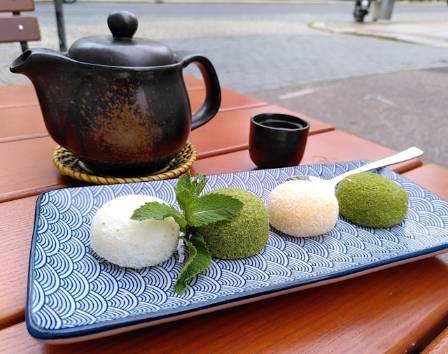
The first step involves creating the outer shell. In a mixing container, combine the mochiko flour, sugar, and water, whisking the mixture until it reaches a perfectly smooth, liquid consistency. To cook the dough, you have two convenient options: steam the mixture for approximately eight minutes or use a microwave for three to four minutes. If using a microwave, ensure you stir the mixture thoroughly halfway through the cooking time to maintain an even texture.
Once the mochi is cooked and has become translucent and elastic, prepare a flat surface or a baking pan lined with parchment paper. Generously dust the area with potato starch. Transfer the hot mochi onto the paper and carefully flatten it until it is roughly 5/16 of an inch thick. Allow the sheet of mochi to sit undisturbed until it has completely cooled, which makes it much easier to handle and shape.
Assembly and Final Shaping
After the mochi has reached room temperature, use a circular cutter or a glass to stamp out discs approximately three inches in diameter. To build the center, place about two to three tablespoons of your chosen bean paste in the middle of a mochi circle. Take a cleaned strawberry and press it firmly into the paste, tip-side down.
To finish the daifuku, lift the edges of the mochi disc toward the top, stretching it gently over the bean paste and fruit. Pinch the ends together securely to seal the strawberry and paste inside, forming a soft, rounded pyramid shape. Place the dessert on a plate with the seam side facing down to ensure the structure remains intact. These treats are best enjoyed at room temperature for maximum softness, but they can be kept in a refrigerator for up to three days.
यह भी पढ़ें

How to Prepare a Field for Planting
Jackson Reid

A Complete Guide to Capturing Beautiful Sunset Photos
Lily Morgan

स्कीइंग को और भी रोमांचक बनाएँ: ढलान पर अपने अनुभव को बेहतर बनाने के 9 तरीके
योगेश

20 सर्वश्रेष्ठ और सबसे प्रसिद्ध AI तकनीकें यहाँ सूचीबद्ध हैं।
इंद्रजीत

10 Minimalist Street Style Outfits: Simple, Stylish Looks for Everyday Wear
Emily Turner

The Top 10 Players with the Most Centuries in ODI Cricket
Jimmy