विशेष लेख
The Most Baffling Sea Dwellers
Beneath the ocean's surface exists a world of alien beauty and biological wonder, dominated by creatures that defy conventional understanding. Jellyfish, with their gelatinous forms and ethereal movements, represent some of the most ancient and successful life forms on our planet. These brainless, bloodless, and heartless organisms have captivated scientists and ocean enthusiasts alike with their extraordinary adaptations and otherworldly appearances across diverse marine environments.
Andrew Moore
लेखक
लेख परिचय
नीचे पूरा लेख पढ़ें।
अनुभाग
समाचार
Beneath the ocean's surface exists a world of alien beauty and biological wonder, dominated by creatures that defy conventional understanding. Jellyfish, with their gelatinous forms and ethereal movements, represent some of the most ancient and successful life forms on our planet. These brainless, bloodless, and heartless organisms have captivated scientists and ocean enthusiasts alike with their extraordinary adaptations and otherworldly appearances across diverse marine environments.
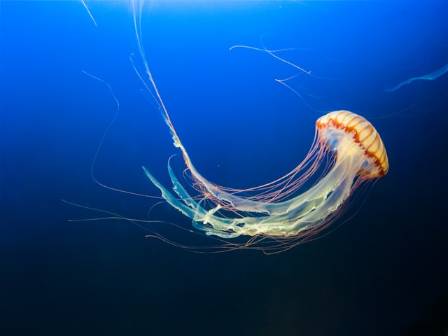
The Ornate Cauliflower Jelly
The cauliflower jellyfish (Cephea cephea) presents one of the ocean's most distinctive profiles with its wartlike projections covering a substantial bell that can reach up to two feet in diameter. Also known as the crowned jelly, this species navigates the mid-Pacific, Indo-Pacific, and Atlantic waters off West Africa with graceful determination. Its striking appearance and considerable size make it a magnificent sight for fortunate deep-sea observers encountering this oceanic wanderer.
The Miniature Mangrove Box Jelly
Defying conventional jellyfish morphology, the mangrove box jelly (Tripedalia cystophora) measures no larger than a grape and boasts a unique cube-shaped medusa. This radical departure from the typical dome structure allows for remarkably rapid movement through the water. Despite its tiny size, this species demonstrates that evolutionary innovation comes in small packages, challenging our expectations of what form a successful marine organism should take.
The Luminous Crystal Jelly
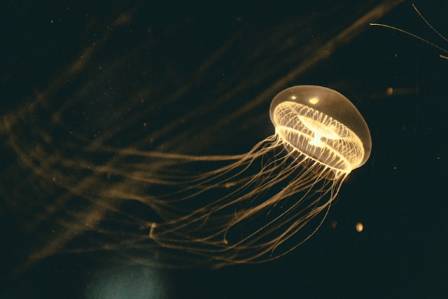
Along North America's West Coast drifts the ethereal crystal jellyfish (Aequorea victoria), a creature of breathtaking transparency with long, delicate tentacles trailing from its glasslike bell. By day, it appears completely colorless and nearly invisible, but when disturbed, it reveals its hidden magic: a brilliant bioluminescent glow that illuminates the waters with green-blue light. This transformation from invisible to radiant represents one of the ocean's most beautiful defensive adaptations.
The Filter-Feeding White-Spotted Jelly
The white-spotted jellyfish (Phyllorhiza punctata) patrols the western Pacific from Australia to Japan with a distinctive speckled crown and remarkable feeding capacity. Each individual can filter over 13,000 gallons of water daily in its quest for microscopic zooplankton. While efficient, this appetite becomes problematic in non-native waters where these jellies have invaded, as they can devastate local ecosystems by consuming the foundation of the marine food web that native species depend upon.
The Photosynthetic Upside-Down Jelly
Challenging all conventional jellyfish behavior, the upside-down jellyfish (Cassiopea) rests its bell on the seafloor with tentacles facing upward toward the sunlight. This unusual orientation serves a vital purpose: exposing symbiotic algae within its tissues to sunlight for photosynthesis. Found in the warm waters of Florida and the Caribbean, this species demonstrates nature's incredible capacity for innovation, essentially farming its own food source through a unique partnership with microorganisms.
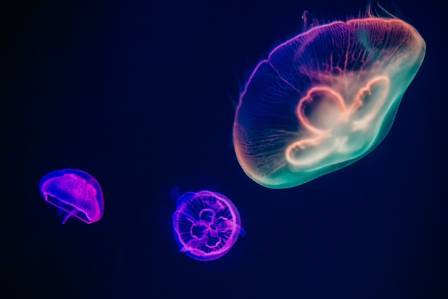
Jellyfish continue to astonish us with their diversity, adaptations, and sheer otherworldly beauty. From the photosynthesizing upside-down jelly to the invasive white-spotted filter feeder, these creatures remind us that evolutionary success comes in many forms. Their persistence through millions of years and ability to thrive in changing ocean conditions offer both wonder and warning about the future of marine ecosystems and the fascinating creatures that inhabit them.
यह भी पढ़ें

रोसी से लेकर रूंबा तक, स्वायत्त रोबोट विज्ञान कथा को जीवन में लाते हैं
अनया

ब्लैक होल: एक और आयाम के लिए पोर्टल्स?
मुहम्मद तुहिन

NFL की सबसे कीमती टीमें 2025
अंजली

स्कीइंग को और भी रोमांचक बनाएँ: ढलान पर अपने अनुभव को बेहतर बनाने के 9 तरीके
योगेश

Expert Guide to Identifying Beach Rocks
Hannah Quinn

10 प्रेरणादायक महिलाएं जो दुनिया बदल रही हैं
हेमंत