← मुखपृष्ठ2 मिनट का पाठ
विशेष लेख
10 Fascinating Facts That Will Change How You See Squirrels
January 21st marks a special day on the calendar—Squirrel Appreciation Day. But what makes these small creatures deserving of a day in their honor? It turns out, squirrels are far more complex and impressive than they appear at first glance. From their clever tactics to their important role in nature, here are ten remarkable facts that highlight just how extraordinary these bushy-tailed animals really are.
U
Ursula Clarke
लेखक
लेख परिचय
नीचे पूरा लेख पढ़ें।
अनुभाग
समाचार
January 21st marks a special day on the calendar—Squirrel Appreciation Day. But what makes these small creatures deserving of a day in their honor? It turns out, squirrels are far more complex and impressive than they appear at first glance. From their clever tactics to their important role in nature, here are ten remarkable facts that highlight just how extraordinary these bushy-tailed animals really are.
1. They Can Detect Food Beneath Snow Layers
During winter, some squirrel species can locate stashes of food hidden beneath nearly a foot of snow. Guided by scent alone, they dig tunnels through the cold blanket to reach these underground caches—sometimes their own, sometimes another’s.
2. Their Front Teeth Grow Continuously

Squirrels, like other rodents, have incisors that never stop growing. To keep them from becoming too long, squirrels regularly chew on hard surfaces such as bark, nuts, and twigs. This gnawing is essential for dental health.
3. A Quarter of Their Stored Food May Be Stolen
Squirrels often bury food in scattered locations, but this method comes with risks. Other squirrels—or even birds—may uncover and steal up to 25% of the hidden supply, turning food hoarding into a high-stakes game of survival.
4. Their Escape Tactic Is a Zigzag Dash
When danger is near, squirrels rarely flee in a straight line. Instead, they dart in quick, erratic zigzags—an effective way to avoid predators like birds of prey. Unfortunately, this doesn’t help them much when crossing roads.
5. They Fake Hiding Spots to Fool Onlookers
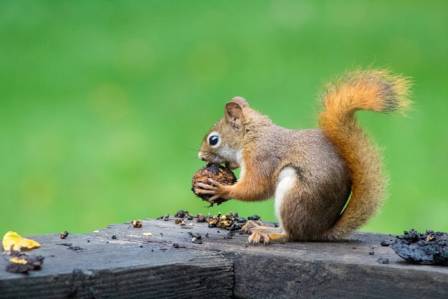
Squirrels sometimes pretend to bury food without actually depositing anything. This behavior, known as deceptive caching, helps confuse potential thieves who might be watching from nearby branches or bushes.
6. Baby Squirrels Are Tiny at Birth
Newborn squirrels are incredibly small—measuring just about an inch long. Hairless and blind, they rely entirely on their mothers for warmth and protection during their first few weeks of life.
7. City Parks Didn’t Always Have Squirrels
Urban green spaces across the U.S. are now teeming with squirrels, but that wasn’t always the case. People intentionally brought these animals into city parks in past centuries to add liveliness and help people connect with nature.
8. They Are Skilled, Smart, and Resourceful

If you’ve ever tried to squirrel-proof a bird feeder, you know how clever they can be. These agile animals are capable of navigating complex obstacles, remembering food locations, and adapting quickly to new environments.
9. They Bulk Up Before the Cold Arrives
To stay insulated during chilly months, squirrels add body fat in autumn. This seasonal weight gain helps them maintain body heat through winter when food is scarce and temperatures plummet.
10. They Accidentally Grow Forests
Not all of the nuts squirrels hide are ever retrieved. Those forgotten seeds often sprout into saplings, making squirrels unsuspecting contributors to reforestation and tree growth.
Whether they’re burying acorns, outwitting predators, or unintentionally planting the next generation of oaks, squirrels prove to be far more than cute backyard visitors. Their habits play a meaningful role in ecosystems—and that’s certainly something worth appreciating.
यह भी पढ़ें

hi
10 प्रेरणादायक महिलाएं जो दुनिया बदल रही हैं
हेमंत

hi
तूफानों द्वारा तराशी गई आकृतियाँ
मोहन

hi
2026 में रात में दुनिया के सबसे सुंदर शहर
लक्ष्मी

hi
दुनिया के शीर्ष 12 सबसे अच्छे पूल खिलाड़ी
आरोशी

hi
बीज से अंकुर तक: अंकुरित करने के लिए एक शुरुआती मार्गदर्शिका, लुईस कोहेन-सिल्वर, पीएच.डी., वी.एल.सी.ई. द्वारा
देव

en
8 Essential Tips for Perfect Stovetop Popcorn
Jordan