← मुखपृष्ठ2 मिनट का पाठ
विशेष लेख
Meet the Ocean's Ancient Navigators: Marine Turtles
A Legacy That Predates the Dinosaurs Marine turtles have existed for more than 100 million years, long before many of today’s species roamed the planet. There are seven recognized types swimming Earth’s oceans today: the hawksbill, loggerhead, leatherback, olive ridley, green, flatback, and Kemp’s ridley. While six of them face the threat of extinction, scientists still lack sufficient data to determine the risk level for the elusive flatback.
S
Sophia Maren
लेखक
लेख परिचय
नीचे पूरा लेख पढ़ें।
अनुभाग
समाचार
A Legacy That Predates the Dinosaurs
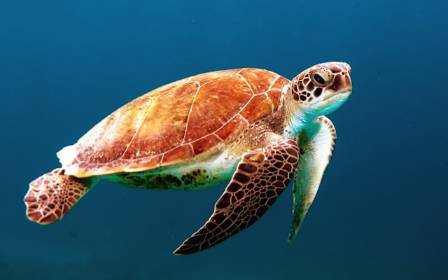
Marine turtles have existed for more than 100 million years, long before many of today’s species roamed the planet. There are seven recognized types swimming Earth’s oceans today: the hawksbill, loggerhead, leatherback, olive ridley, green, flatback, and Kemp’s ridley. While six of them face the threat of extinction, scientists still lack sufficient data to determine the risk level for the elusive flatback.
No Teeth, No Problem
Unlike many sea creatures, marine turtles lack teeth. Instead, they rely on a tough, beak-like mouth made of keratin—just like human fingernails—to grab and break down their meals.
Nature’s Armored Swimmers
Turtle shells are engineering marvels made of over 50 fused bones. These natural exoskeletons not only provide protection but also house their internal organs. Their internal bones are spongy and lightweight, helping them float effortlessly through the sea.
The Hidden Years at Sea
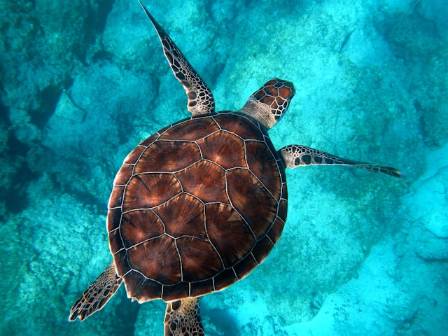
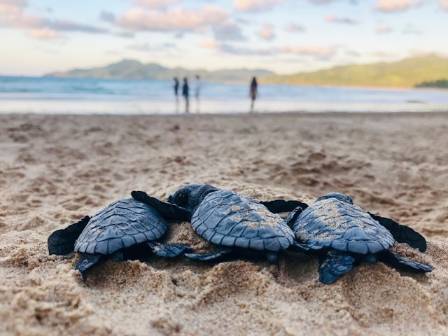
After hatching, young turtles vanish into the ocean, disappearing from scientific view for up to two decades. This elusive period, often called “the lost years,” remains one of the most mysterious chapters in a turtle’s life journey.
Ocean Giants
From the petite Kemp’s ridley to the mighty leatherback, marine turtles come in all sizes. While some measure less than a meter and weigh just 40 kilograms, leatherbacks can grow over 1.8 meters long and reach a staggering 500 kilograms—or more. One legendary specimen found on a Welsh beach tipped the scales at over 900 kilograms!
Against the Odds
For every 1,000 hatchlings that reach the waves, only a single turtle is likely to survive to adulthood. Alongside predators, human-induced dangers—like discarded plastic and fishing gear—make the ocean a perilous place for these young travelers.
Mysterious Voices of the Night
Female leatherbacks are known for making unusual sounds while nesting—some of which resemble human burps. These vocalizations remain a curious aspect of their reproductive behavior.
Tears of the Sea
Marine turtles often appear to weep, especially when laying eggs. However, those "tears" are actually a biological adaptation: a special gland near their eyes releases excess salt absorbed from seawater, keeping their internal balance in check.
Endurance Swimmers
Turtles are true distance champions. One tracked leatherback journeyed nearly 21,000 kilometers across the Pacific Ocean—from the waters of Southeast Asia all the way to the Americas—demonstrating astounding endurance and navigation skills.
Returning to Their Roots
Female turtles display remarkable homing instincts, returning to the very beaches where they hatched to lay their own eggs. Their internal compass, guided by the Earth's magnetic field, helps them find their birthplace even after decades at sea.
यह भी पढ़ें

hi
पाँच प्रजातियाँ जो बेहतरीन इनडोर बोनसाई बनाती हैं
प्रतीक

hi
आठ नीला-पानी बच जाता है
जोनाथन थॉम्पसन

hi
एक जादुई शीतकालीन वंडरलैंड का निर्माण: एक DIY फेल्ट स्नोवी ट्री प्रोजेक्ट
स्मृति वर्मा
hi
बंदरों के बारे में 14 रोचक तथ्य
अंजू

hi
नारियल का दूध: चयन, उपयोग और भंडारण के लिए एक व्यापक मार्गदर्शिका
सचिन कौशिक

en
The Most Colorful Facts About Mandarin Ducks
Melissa Green