← मुखपृष्ठ3 मिनट का पाठ
विशेष लेख
The Flamingo Files: Secrets of the Pink Icons
Mud Masterpieces: Flamingo Nesting Habits Far from delicate, flamingos are skilled architects. Their nests are sculpted from mud into small cone-shaped towers—just high enough to keep a single egg safe from flooding. These birds form lifelong bonds, and both partners work side by side to shape the nest and share incubation duties. At birth, flamingo chicks are fluffy with pale gray plumage and straight beaks, a far cry from the vivid adults they’ll grow into.
J
Jasper Wren
लेखक
लेख परिचय
नीचे पूरा लेख पढ़ें।
अनुभाग
समाचार
Mud Masterpieces: Flamingo Nesting Habits
Far from delicate, flamingos are skilled architects. Their nests are sculpted from mud into small cone-shaped towers—just high enough to keep a single egg safe from flooding. These birds form lifelong bonds, and both partners work side by side to shape the nest and share incubation duties. At birth, flamingo chicks are fluffy with pale gray plumage and straight beaks, a far cry from the vivid adults they’ll grow into.
The Diet Behind the Hue
Ever wondered why flamingos blush with such bold pinks? Their color comes from carotenoid pigments found in their diet of algae and tiny crustaceans like brine shrimp. These compounds, also responsible for the orange of carrots and the red of ripe tomatoes, are broken down in the flamingo’s digestive system and deposited in their feathers, giving them their iconic coloration.
Eating Upside Down: A Unique Dining Technique
Flamingos don’t just wade in water—they dine in it. With their heads turned downward and beaks submerged, they filter-feed by pumping water in and out of their mouths using their tongues. Tiny hair-like structures on the beak trap morsels such as algae, larvae, seeds, and small aquatic life, while water drains away—leaving only the good bits behind.
The Charm of a Flamboyance
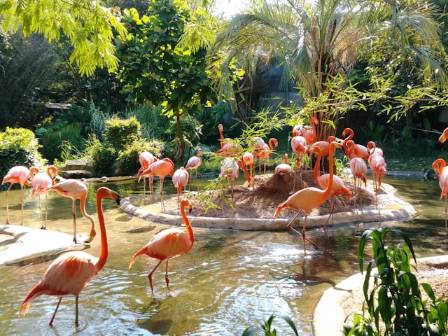
A gathering of flamingos isn’t called a flock—it’s a flamboyance. The name suits their dazzling display of synchronized movement and striking appearance. In the wild, thousands may gather in one spot, painting the landscape pink. Among the six known species, the Caribbean flamingo—commonly seen in zoos—is particularly well-known for its vivid plumage and social nature.
Meet the Extended Flamingo Family
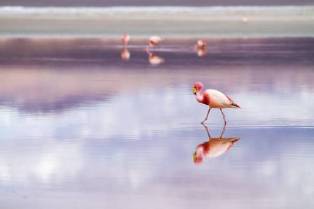
Flamingos come in six distinct species, each with its own range and characteristics. The greater flamingo stands tallest and is widespread across Africa, Asia, and Europe. On the other hand, the lesser flamingo is the most numerous and smallest in size, seen throughout parts of Africa and South Asia. In South America, you’ll find the Chilean, Andean, and James’s flamingos—each adapted to unique regional environments. The rarest? The Andean flamingo, with fewer than 40,000 individuals.
Leg Illusions: What You're Really Seeing
A flamingo’s legs might appear to bend backward, but that’s an illusion. What seems like a backward knee is actually its ankle. Their true knees are located higher up, hidden beneath feathers. Think of them as permanently walking on tiptoe—a clever adaptation for wading through shallow waters.
Thriving in Harsh Waters
Some flamingos live in alkaline lakes so salty they’d burn human skin. These extreme habitats—too harsh for most life—are home to several flamingo species that have evolved to tolerate highly corrosive conditions. However, even these resilient birds face challenges: salt encrustations can form around chicks’ legs, preventing them from walking and endangering their survival.
Parenting the Flamingo Way
Flamingo parents feed their young a rich, red fluid known as crop milk. Secreted from glands in the throat, it’s packed with nutrients to fuel fast growth. Both mother and father can produce this essential nourishment, supporting the chick until it's ready to feed independently.
Flight of the Flamingo
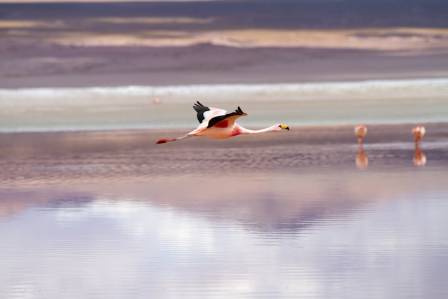
Though best known for their elegant struts, flamingos are powerful fliers. They travel long distances—often at night—to find new feeding grounds, migrate with the seasons, or seek safer breeding sites. In flight, their long necks and legs stretch out in graceful symmetry.
The One-Legged Rest Pose
Flamingos often stand on one leg, even while sleeping. This peculiar stance actually serves a purpose: it helps conserve body heat. By tucking one leg close to the body, they reduce heat loss through their limbs. Interestingly, research shows they may also use less muscular energy in this posture, making it an efficient way to rest.
Flamingos are far more than just a pop of color in the wetlands. With their fascinating behaviors and remarkable adaptations, they continue to charm scientists and bird lovers alike—living proof that nature’s elegance often comes in unexpected forms.