विशेष लेख
The Stunning Red Crowned Crane and Its Amazing World
The magnificent red crowned crane is one of the rarest birds on our planet. People also call it the Japanese crane or the Manchurian crane. This giant bird lives in Northeast Asia. For centuries, people have loved this creature. It stands as a powerful symbol of luck and long life. It also represents deep fidelity.
Bennett Oliver
लेखक
लेख परिचय
नीचे पूरा लेख पढ़ें।
अनुभाग
समाचार
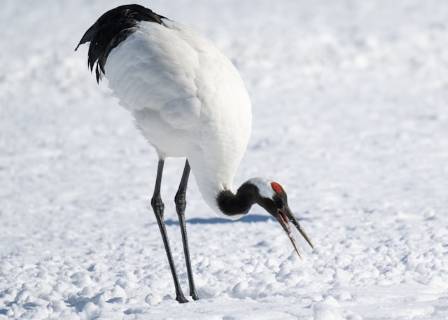
The magnificent red crowned crane is one of the rarest birds on our planet. People also call it the Japanese crane or the Manchurian crane. This giant bird lives in Northeast Asia. For centuries, people have loved this creature. It stands as a powerful symbol of luck and long life. It also represents deep fidelity.
Physical Appearance and Key Features
Adult birds have a famous patch of bare red skin on their heads. This red crown gets much brighter when they look for mates. Their bodies are mostly covered in beautiful snow white feathers. The secondary feathers on their wings are deep black. When the bird stands still, these black feathers look like a dark tail. However, their true tail feathers are completely white. Males have black feathers on their cheeks and necks. Females display a soft gray color in those same areas. They have olive green bills and dark grayish legs. Young birds look quite different from their parents. They carry a mix of white and brown feathers. Their necks look grayish or a deep coffee brown. Their bodies show shades of cinnamon and rust. These birds are among the heaviest cranes in the entire world. They can grow up to one hundred and fifty eight centimeters tall. Their wingspan is enormous. It easily reaches up to two hundred and fifty centimeters. An adult crane usually weighs between five and eleven kilograms. Males are generally larger than females. They gain extra weight just before they begin their long seasonal journeys.
The Origins of Their Names
The scientific name of this bird connects it to Japan. However, its main home is on the Asian mainland. The common English name comes from a direct translation of traditional regional terms. In China, people call it the red crown bird. In Japan, it is known as the Tancho. Older books often use the name Manchurian crane. This old name points to the historic region of Manchuria where many cranes live. In Korea, locals use native words that mean crane. All these names celebrate the unique look and regional home of this magnificent bird.
Where They Live and Roam
During the warm spring and summer seasons, these migratory birds breed in eastern Russia and Northeast China. Some pairs also build nests in Mongolia. The main breeding area centers around large lakes on the border of China and Russia. When autumn arrives, the flocks fly south together. They spend the cold winter months in the Korean Peninsula and east central China. There is also a special group of cranes that does not migrate. This resident group stays in northern Japan all year round. These birds love wetlands, marshes, and deep rivers. In the winter, they move to rice fields and coastal mudflats. They search for food in the mud. When heavy snow covers the ground, they rely heavily on leftover rice grains in the fields.
What They Eat and How They Hunt
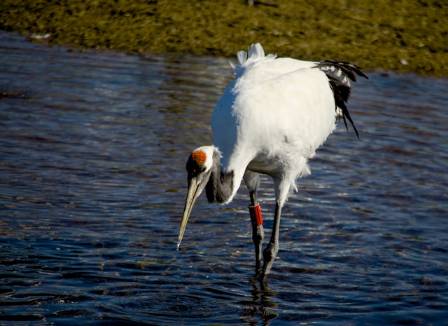
These large birds eat almost anything they can find. They consume a rich variety of plants and animals. Their plant diet includes wild rice, carrots, corn, and berries. They also eat water reeds and grass seeds. When they want animal protein, they hunt for fish, salamanders, and crabs. They also catch insects, small rodents, and tiny birds. An adult crane needs about seven hundred and fifty grams of food every single day. They prefer animal prey when it is available. However, left over rice is crucial for their survival during cold winters. They usually forage by lowering their heads close to the wet ground. They poke their sharp bills into the soft mud. When they see a fish, they strike forward with lightning speed. They extend their long necks just like a heron does. They can swallow small items whole. For larger prey, they shake it violently with their beaks to break it into pieces. Most of this hunting happens in shallow rivers, wet fields, and muddy lake shores.
The Incredible Journey of Migration
Only the mainland populations of these cranes travel long distances. The unique group living in northern Japan stays close to home. They only move a short distance to find winter food. The migratory cranes leave their winter homes early in the year. They arrive at their nesting territories by April. In the autumn, they start their journey back south. This movement happens between October and December. China contains many vital areas for their breeding and winter survival. The birds fly along established pathways. Some fly south along major rivers and pass through the Korean Peninsula. Others move along coastal bays to reach wetlands in eastern China. These long journeys require great strength and perfect timing.
Social Lives and Community Habits
Because these birds are rare, their groups are often small. They need a lot of space to hunt for meat. In the winter, they look for food in small family units or pairs. Sometimes they even forage alone. However, they gather in much larger groups to sleep safely at night. When spring approaches, pairs spend almost all their time together. Young birds and singles form separate groups. These cranes can be very aggressive toward neighbors. They always keep a safe distance from each other to avoid painful pecks. If any bird breaks this rule, a fierce fight can start immediately.
Courtship and Family Creation
These beautiful birds choose one partner and stay together for life. They reach adulthood around three or four years of age. They lay their eggs during the spring months. To strengthen their bond, a pair will perform a beautiful duet. The male starts with a long call, and the female joins in. They move rhythmically together and throw their heads back. This loud music often inspires nearby pairs to sing as well. The dance shows their excitement and helps them defend their nesting area. Each pair guards a large territory of flat wetland. The female chooses the perfect spot for the nest. Both parents help build it using dry grass. They usually build it in shallow water or on wet ground. Sometimes they even build it on top of ice. The female typically lays two eggs. Both the mother and father take turns sitting on the eggs for a month. They also work together to feed the chicks. The babies can follow their parents into the marsh after a few weeks. They can fly well by the time autumn migration begins. Young cranes stay with their parents for about nine months. They keep a high pitch voice to show they are still babies. These birds can live for thirty years in the wild. In protected environments, they have been known to live for over forty five years.
Survival Against Other Animals
Adult cranes are so large that they have very few natural enemies. They are usually calm around small birds and hawks. However, they will attack animals that try to steal their eggs. They fiercely chase away crows and large eagles. If a fox, badger, or wild dog gets too close to the nest, the parents strike immediately. They jab at the intruder with their sharp beaks until it runs away. Even large wolves can be driven off by an angry pair of cranes. Sometimes, small predators manage to steal eggs when the parents are away. Young or careless cranes can also be ambushed by wild cats or foxes. However, this does not happen often. The cranes can easily fly away or use their dagger like bills for defense. Smaller crane species sometimes nest nearby. The red crowned crane always dominates because of its superior size. Humans must also be careful. These birds will attack quickly if people get too close to their nests.
Current Conservation Status
The global population is divided into two distinct groups. One group travels across the mainland, and the other stays in Japan. Recent counts show a total of several thousand birds left in the wild. The populations in Japan and Korea have shown some growth recently. Sadly, the group that winters in mainland China is shrinking fast. The biggest threat to their survival is the loss of wild wetlands. Human disturbance, pollution, and illegal hunting also cause harm. International organizations classify this bird as an endangered species. Many nations are working together to save these birds. Zoos across the world participate in special breeding programs. They share eggs to help rebuild wild populations in nature reserves. The survival of the species depends heavily on protecting pristine wetlands. In many countries, the government has given these cranes the highest level of legal protection.
Historical Records and Modern Science
Humans have admired this bird for a very long time. Ancient records show that people kept them as treasured pets during historic dynasties. Dedicated scientific research began in the late twentieth century. Scientists now understand their breeding habits and winter homes much better. Modern satellite tracking tools have mapped their exact migration routes. In the nineteenth century, indigenous people worshipped the crane as a god of the marsh. The bird is a key species for keeping the ecosystem healthy. However, modern human development has caused great damage. Land clearing and farming have destroyed many wetlands. Water pollution has also put the birds in danger. In the past, people hunted them for feathers. Today, accidental poisoning from agricultural chemicals remains a serious threat. Governments have created dozens of special nature reserves to protect these habitats.
Cultural Meaning in East Asia
This bird holds a legendary place in East Asian art history. People view it as a sacred creature that brings good fortune. In ancient legends, the crane is a symbol of immortality. Mythological stories often show immortal beings riding through the sky on the back of a crane. Artists have put the image of the crane on ceremonial bronze items, beautiful paintings, and ancient pottery. It represents nobility, loyalty, and high moral character. The crane also appears on modern items like coins and national symbols. Its image is used by major transportation companies to represent strength and loyalty. It remains a deeply loved icon of peace and purity across many nations.
यह भी पढ़ें

How to Make the Silkiest, Most Delicious Pudding (A Dessert That Deserves More Love)
Alexander

कीव में मातृभूमि स्मारक के बारे में रोचक तथ्य
हरीश

आपके घर में पौधों और हरियाली के 5 स्वास्थ्य लाभ
गोपाल

The Best Off-Road Pickup Trucks
Grace Turner

Clear Lake, Northern California — North America’s Ancient Lake
Benjamin Ward

मोटरसाइकिल पर आप जो 10 चीज़ें कर सकते हैं
शिवम्