विशेष लेख
The Old-Fashioned Windmill
Photographs of 19th-century farms and ranches often show a windmill standing prominently in the landscape. These structures played a key role in enabling settlement across the Great Plains. Alongside inventions such as sod homes, barbed wire fencing, and firearms like the Colt revolver, windmills helped make life in the western territories possible.
Miles Parker
लेखक
लेख परिचय
नीचे पूरा लेख पढ़ें।
अनुभाग
समाचार
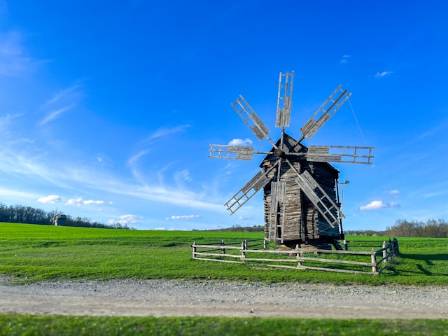
Photographs of 19th-century farms and ranches often show a windmill standing prominently in the landscape. These structures played a key role in enabling settlement across the Great Plains. Alongside inventions such as sod homes, barbed wire fencing, and firearms like the Colt revolver, windmills helped make life in the western territories possible.
As settlers moved from the wetter eastern United States into the drier western regions, they relied on wind-powered systems to bring water to dry land. The windmill, with its rotating blades atop a tall tower, became a defining feature of rural farms and would remain a symbol of American agriculture for over a century.
Climate, Settlement, and the Role of Water
The 100th meridian divides the United States into a wetter eastern half and a much drier western half. West of this line, farming depended heavily on irrigation rather than rainfall. Without wind-powered water pumping systems, settlers would have been limited to areas near rivers or natural springs.
While windmills had long been used in other parts of the world for grinding grain, American settlers adapted the technology into automatic water-pumping systems. These designs could rotate to face shifting wind directions, allowing continuous operation.
Across the Plains, this innovation created a widespread “windmill region,” where underground water sources and steady winds made large-scale farming and ranching possible. After the Homestead Act of 1862 encouraged land division and settlement, many farmers installed private wells powered by windmills to support crops and livestock.
Development and Everyday Use
Early successful models, such as the wooden Eclipse windmill, were effective but required frequent maintenance. Their exposed gear systems meant farmers had to climb the tower regularly for lubrication and repairs. In some accounts, windmill maintenance even became part of rural courtship culture due to the physical effort involved.
A major improvement came with self-lubricating systems that reduced maintenance needs and made windmills far more practical. Some farmers constructed their own versions using locally available materials, including scrap metal, wagons, and timber.
Although relatively affordable, transportation costs made installation challenging in remote areas. Larger farms often required multiple windmills to meet irrigation demands across wide fields.
Decline of the Windmill Era
The spread of electricity across rural America gradually reduced dependence on wind-powered water systems. After World War I, falling agricultural prices and later the Great Depression further weakened the industry.
Federal rural electrification programs in the 1930s accelerated the transition away from windmills. By this time, most manufacturers had closed or shifted production toward wartime industries. During the peak period between the mid-1800s and early 1900s, hundreds of companies produced windmills, but only a small number survived into the modern era.
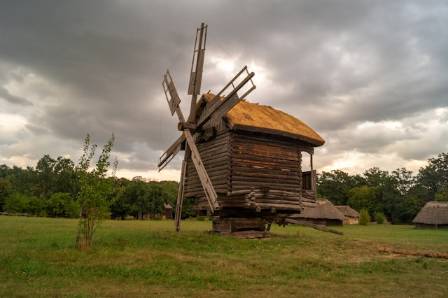
Many abandoned windmills deteriorated over time or were destroyed by storms and lightning, as their tall metal structures made them vulnerable in open plains environments.
Preservation and Cultural Revival
Interest in preserving windmill heritage grew in the 20th century thanks to individuals who recognized their historical value. One such effort involved the collection of historic windmills later preserved at the American Windmill Museum in Texas, where rare models were saved from private ownership and potential loss.
Today, restoration work continues through dedicated specialists and small businesses that repair both decorative and functional windmills. Some projects aim to return windmills to working farm use, reconnecting modern agriculture with historical methods.
At the same time, younger generations and hobby farmers have shown renewed interest in rural lifestyles, including restoring traditional windmills on small properties. Museums and heritage parks across the Great Plains also maintain collections that preserve this agricultural history.
Legacy of the Windmill
Although original working windmills have largely disappeared from the American landscape, their cultural and historical significance remains strong. Preservation efforts by museums, collectors, and rural communities ensure that future generations can still understand their importance.
More than simple machinery, windmills represent a period of innovation and adaptation that shaped settlement across the Great Plains. Their legacy continues to influence how people remember the development of American farming and rural life.
यह भी पढ़ें
सुंदर परिदृश्य और रहस्यमय वाइब्स के लिए अमेरिका में 5 सर्वश्रेष्ठ रेगिस्तान शहर
स्टेसी लीसा

बीच पर रहने वाले पक्षियों की 15 शानदार किस्में
अक्षय

चाँद पर हमारे पहले पदचिह्न बनाए हुए 47 साल हो गए हैं — यहाँ वह बातें हैं जो आप पृथ्वी के धूल भरे साथी के बारे में नहीं जानते होंगे
सिद्धार्थ
Finding Out the Global Population of White Rhinos
Natalie Foster
घास के मैदानों के बगीचे आजकल तेज़ी से लोकप्रिय हो रहे हैं—इसे कैसे उगाएँ, जानिए
अनिता

पवन-दिशा क्या है?
जया