विशेष लेख
Growing Sunflowers for Beginners
If you want to bring beauty, attract pollinators, and provide a valuable food source for both wildlife and people, sunflowers are an excellent choice. These bright and cheerful flowers are a versatile garden plant that combines decorative appeal with practical benefits. They are among the few crops that can serve both ornamental purposes and oilseed production needs.
Noah Bennett
लेखक
लेख परिचय
नीचे पूरा लेख पढ़ें।
अनुभाग
समाचार
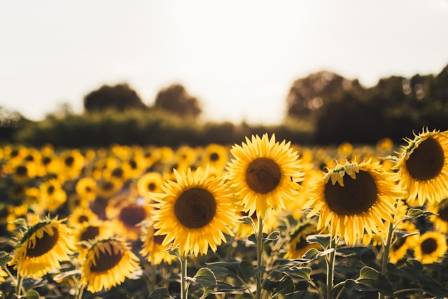
If you want to bring beauty, attract pollinators, and provide a valuable food source for both wildlife and people, sunflowers are an excellent choice. These bright and cheerful flowers are a versatile garden plant that combines decorative appeal with practical benefits. They are among the few crops that can serve both ornamental purposes and oilseed production needs.
Sunflowers are grown from seeds and are available in many different colors, patterns, and sizes. Most varieties reach around 6 feet tall, but depending on the type, they can range from compact 2-foot plants to towering varieties that grow up to 15 feet. Through succession planting, gardeners can enjoy sunflower blooms throughout the summer and into autumn.
Although sunflowers are among the few crops originally native to the United States, large-scale production did not become common until the 1970s, when demand for sunflower oil increased in Europe. Their adaptability allows them to grow successfully in many different soil types and climates.
During early growth, young sunflower buds follow the movement of the sun to capture maximum sunlight, a behavior known as heliotropism. After the flower matures, the stem becomes firm, and the flower heads usually remain facing east.
Sunflower Production Types
There are two primary categories of sunflowers grown today: oilseed varieties and confectionery varieties.
Oilseed sunflowers are cultivated mainly for producing sunflower oil and bird feed. Sunflower oil is considered a healthier cooking oil because it contains relatively low levels of saturated fat.
Confection sunflowers are grown for people to eat. Their larger seeds are commonly roasted, baked, or enjoyed as snacks.
Soil Requirements and Fertilization
Sunflowers develop strong and extensive root systems that allow them to absorb nutrients efficiently from the soil. They perform best in well-draining soil with a pH level between 6.0 and 7.0, especially clay loam and silty clay soils. Before planting, it is recommended to test the soil to determine its nutrient levels and pH balance.
When the plants develop their second set of leaves, applying a slow-release general fertilizer can encourage stronger growth and larger blooms.
Sunflowers also benefit from split nitrogen applications. Half of the recommended nitrogen can be added during planting, while the remaining amount can be applied later in the growing season to support continued development.
Planting Sunflowers
Sunflowers are annual plants that grow best in areas receiving full sunlight. They are easy to establish directly from seeds, although gardeners can also start them indoors and transplant them later to achieve earlier flowering.
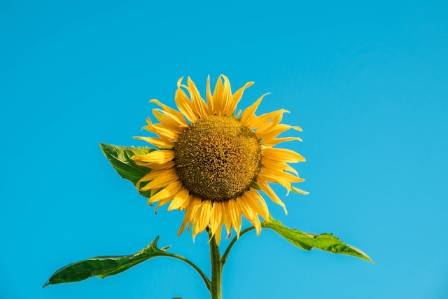
Direct Seed Planting
Plant sunflower seeds about 1 to 2 inches deep after the danger of frost has passed. Smaller varieties should be spaced about 6 inches apart, while taller varieties need approximately 12 inches between plants.
Once seedlings appear, remove extra plants if necessary to prevent overcrowding. Rows should generally be separated by 2 to 3 feet to provide enough space for healthy growth.
Starting Seeds Indoors and Transplanting
Starting sunflower seeds indoors provides better control over early growth and can lead to earlier blooms. Biodegradable containers are ideal because they can be planted directly into the soil without disturbing the roots.
Before moving seedlings outdoors, they should be gradually adapted to outdoor conditions through a process called hardening off. About one week before planting, place seedlings outside in a protected area for a few hours each day. Slowly increase their outdoor exposure until they can remain outside for a full day and night.
Once frost danger has passed, the young plants can be transplanted into the garden.
Most sunflower varieties mature within 85 to 95 days. To extend the flowering season, gardeners can use succession planting by sowing seeds every two to three weeks, combining varieties with different maturity periods, or planting several types with staggered growth schedules.
Water Requirements
Sunflowers tolerate heat and moderate drought conditions, but consistent watering is important during their early growth stages to encourage strong root development.
Watering is also necessary when applying fertilizer because moisture helps move nutrients into the root zone where plants can absorb them.
After plants become established, occasional watering is usually enough if rainfall is limited. In general, sunflowers need about 1 inch of water per week.
Managing Weeds
Young sunflower plants are not strong competitors against weeds, so early weed management is essential. Keeping weeds under control allows sunflowers to receive enough moisture, nutrients, and sunlight.
Gardeners can manage weeds through cultivation, hoeing, pulling weeds by hand, or applying mulch around plants. Herbicides may also be used, but always follow the instructions provided on the product label.
Diseases and Insect Problems
Although sunflowers are relatively easy to grow, they can still be affected by animals, insects, and plant diseases.
When choosing a planting location, consider protection from deer because young sunflower plants are especially attractive to them. In areas with large deer populations, fencing or repellents may be necessary.
Birds can also become a problem because they enjoy sunflower seeds. Gardeners can discourage birds by using reflective devices, moving decorations, scarecrows, or artificial predators such as owl figures.
Several diseases may reduce sunflower quality and production, including Alternaria leaf spot, Phoma leaf spot, Rhizopus head rot, rust, and white mold. Powdery mildew and downy mildew can also develop later in the growing season.
Warm, humid weather and prolonged leaf moisture create ideal conditions for many fungal diseases. Early-planted fields may experience greater disease pressure and require additional protection.
Good growing practices, including crop rotation, removing plant residue through deep plowing, and maintaining proper plant spacing, can help reduce disease problems without relying heavily on fungicides.
Sunflowers also attract many insects. Because of this, they are sometimes used as trap crops to draw pests away from other plants. However, they also provide benefits by attracting helpful pollinators such as bees and butterflies. When insecticides are needed, they should always be applied carefully according to label instructions.
Harvesting Sunflowers
When the back of the sunflower head begins turning brown, the plant is ready for harvest.
Large sunflower fields are usually harvested with combines equipped with specialized sunflower headers. Standard crop headers can also be used, although they may result in greater seed loss. Some farmers modify equipment by adding catch pans to collect falling seeds.
Home gardeners can harvest sunflower blooms early in the morning for floral arrangements. When handled carefully, cut flowers can remain fresh in room-temperature water for about a week.
For seed harvesting, flower heads can either be removed and dried before collecting the seeds or allowed to dry naturally while still attached to the stalk.
Nutritional Benefits of Sunflower Seeds
Sunflower seeds provide beneficial unsaturated fats along with important nutrients such as magnesium, copper, manganese, and vitamin E.
A single tablespoon of sunflower seeds contains approximately 51 calories, 2 grams of protein, 4.5 grams of fat, and 2 grams of carbohydrates, making them a nutritious addition to many diets.

यह भी पढ़ें

Learn How to Paint Plum Blossom
Noah Bennett

अपनी अगली छुट्टी पर फ्लाईबोर्डिंग आजमाने के 5 कारण
दीपक

सैंड वॉलीबॉल के टॉप 5 हेल्थ बेनिफिट्स
रश्मि
फल प्लेटों की अद्भुत दुनिया: उनकी रचना और प्रस्तुति का विस्तृत मार्गदर्शिका
नीलम

Intriguing Characteristics of the Elusive Badger
Logan Prescott
The Intelligence of Magpies
Brooklyn James