विशेष लेख
Dark Nebulae: The Hidden Birthplaces of Stars
Dark nebulae are among the most mysterious objects in the universe. These dense clouds of cosmic dust absorb, scatter, and block visible light, causing them to appear as dark silhouettes against the bright backdrop of stars. Rather than glowing like emission nebulae, they stand out because they obscure the light behind them.
Scarlett Dean
लेखक
लेख परिचय
नीचे पूरा लेख पढ़ें।
अनुभाग
समाचार
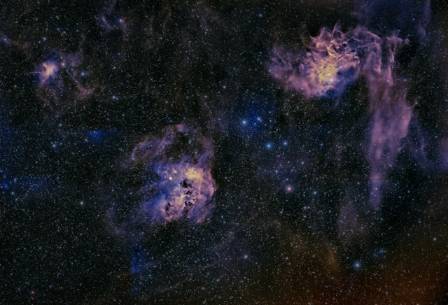
Dark nebulae are among the most mysterious objects in the universe. These dense clouds of cosmic dust absorb, scatter, and block visible light, causing them to appear as dark silhouettes against the bright backdrop of stars. Rather than glowing like emission nebulae, they stand out because they obscure the light behind them.
Well-known examples include the Horsehead Nebula, the Coalsack Nebula, and the Snake Nebula. Their striking dark appearance has fascinated astronomers and astrophotographers for generations.
What Is a Dark Nebula?
A dark nebula is a dense region of interstellar dust and gas that prevents visible light from passing through. Because the dust particles block background starlight, these clouds appear as dark patches in the sky.
Although they may look empty and lifeless, dark nebulae are actually rich in material that can contribute to the birth of new stars. They are important components of the interstellar medium and play a significant role in the life cycle of galaxies.
Barnard Objects and Their Discovery
Many dark nebulae are classified as Barnard objects and identified by a catalog number, such as Barnard 363 or Barnard 164.
These objects are named after American astronomer Edward Emerson Barnard, who published the first major catalog of dark nebulae in 1919. An expanded version of his work was released after his death in 1927.
Barnard’s observations helped establish dark nebulae as distinct astronomical objects and provided a foundation for future studies of interstellar clouds.
Irregular Shapes and Structures
Unlike planetary nebulae, which often display round or symmetrical forms, dark nebulae typically have highly irregular shapes. Their appearance depends on the distribution of dust and gas within the cloud.
Some resemble animals, rivers, or other familiar objects, leading to popular names such as the Horsehead Nebula and the Snake Nebula. These unique shapes are created by variations in density throughout the cloud.
Stellar Nurseries Hidden in Darkness
Despite their dark appearance, many dark nebulae are active star-forming regions. Within these dense clouds, hydrogen molecules gather and collapse under gravity, eventually creating new stars.
The thick dust often conceals these newborn stars from visible-light telescopes. However, radio and infrared observatories can penetrate the dust, allowing astronomers to observe the star-formation processes taking place deep inside the cloud.
As a result, dark nebulae are considered some of the most important stellar nurseries in the universe.
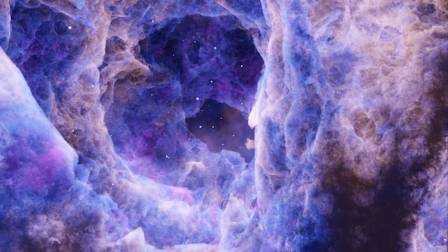
Giant Molecular Clouds and Bok Globules
Dark nebulae can exist in several forms and sizes.
Some are the dense cores of giant molecular clouds, enormous structures that may contain a mass more than a million times greater than that of the Sun. These vast clouds provide the raw material for extensive star formation.
Others appear as compact molecular clouds known as Bok globules. These smaller dark nebulae typically contain only a few thousand solar masses but are extremely dense.
Bok globules are named after Dutch-American astronomer Bart Bok. Scientists believe they often represent an early stage in stellar development. As they accumulate additional mass, gravity may cause them to collapse and initiate the formation of protostars.
Dark Nebulae and Dark Matter: Not the Same Thing
Dark nebulae should not be confused with dark matter.
A dark nebula is composed of ordinary matter, primarily dust and gas, which blocks visible light. Dark matter, by contrast, is an invisible substance that does not emit, absorb, or reflect light.
Astronomers infer the existence of dark matter through its gravitational influence on galaxies, galaxy clusters, and other large-scale structures in the universe. It is estimated to account for roughly 27 percent of the universe’s total matter and energy content.
Famous Examples of Dark Nebulae
Numerous dark nebulae have become popular targets for astronomical observation and astrophotography.
The Coalsack Nebula is one of the most recognizable dark nebulae visible from the Southern Hemisphere.
The Horsehead Nebula is perhaps the most famous dark nebula, known for its distinctive horse-head shape silhouetted against a glowing background.
The Snake Nebula stretches across the Milky Way as a winding dark feature that resembles a giant cosmic serpent.
Other notable examples include Barnard 6, Barnard 143, Barnard 323, Barnard 324, Barnard 164, LDN 673, LDN 889, LDN 935, the Shark Nebula (LDN 1235), and numerous dark cloud complexes within the constellation Cygnus.
Why Dark Nebulae Matter
Dark nebulae provide valuable insights into the processes that create stars and planetary systems. By studying their composition, density, and structure, astronomers gain a better understanding of how stellar evolution begins.
These clouds also reveal the complex interactions between gas, dust, gravity, and radiation throughout the galaxy. Observations using infrared and radio wavelengths continue to uncover hidden details within these seemingly dark regions.
Conclusion
Dark nebulae are far more than empty black patches in the night sky. They are dense reservoirs of gas and dust, regions where future stars are born and where important stages of cosmic evolution unfold.
From massive molecular clouds to compact Bok globules, these shadowy formations offer astronomers a unique window into the earliest phases of star formation. Whether viewed through professional observatories or captured by dedicated astrophotographers, dark nebulae remain some of the most intriguing and beautiful structures in the universe.
Their mysterious silhouettes remind us that even the darkest regions of space can be filled with the ingredients for new beginnings.
यह भी पढ़ें

तिरामिसू का अनावरण: इटली के इस प्रतिष्ठित कॉफी डेज़र्ट के बारे में रोचक जानकारी
साहिल खुराना

8 खूबसूरत थैंक्सगिविंग डेकोर आइडिया जो आपके मेहमानों को ज़रूर चौंका देंगे
सुमित
The Old-Fashioned Windmill
Miles Parker

Top ATVs for Desert Trail Adventures
Tina
How to Prepare a Field for Planting
Jackson Reid

कला में इस्तेमाल होने वाले सबसे असामान्य रंग।
दीक्षा