विशेष लेख
Guédelon Castle: Building a Medieval Fortress Through Experimental Archaeology
In the forested heart of Burgundy’s Puisaye region, 100 miles southeast of Paris, a thirteenth-century castle is rising—one stone, one timber, and one hand-forged nail at a time. Guédelon Castle, nestled in an abandoned quarry, is no mere replica; it is the world’s most ambitious and longest-running experimental archaeology project. Since 1998, a team of 40 artisans, builders, and researchers has labored to construct a medieval fortress using only the tools, techniques, and materials available in the 1200s. Their mission: to uncover the lost knowledge of medieval craftsmanship, fill gaps in archaeological understanding, and bring to life the realities of building in an era without power tools, concrete, or modern blueprints.
Elias
लेखक
लेख परिचय
नीचे पूरा लेख पढ़ें।
अनुभाग
समाचार
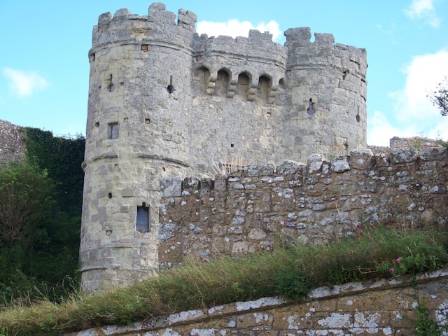
In the forested heart of Burgundy’s Puisaye region, 100 miles southeast of Paris, a thirteenth-century castle is rising—one stone, one timber, and one hand-forged nail at a time. Guédelon Castle, nestled in an abandoned quarry, is no mere replica; it is the world’s most ambitious and longest-running experimental archaeology project. Since 1998, a team of 40 artisans, builders, and researchers has labored to construct a medieval fortress using only the tools, techniques, and materials available in the 1200s. Their mission: to uncover the lost knowledge of medieval craftsmanship, fill gaps in archaeological understanding, and bring to life the realities of building in an era without power tools, concrete, or modern blueprints.
What began as a bold idea has evolved into a living laboratory. Every challenge—from mixing lime mortar to fitting window frames—becomes an opportunity to decode the past. “At Guédelon, we’re not just building a castle; we’re letting the castle speak,” says Florian Renucci, the master mason and site director who has led the project for over two decades. “Traditional archaeology uncovers ruins, but experimental archaeology reveals how those ruins were made. We learn by doing—by sweating, struggling, and sometimes failing, just as medieval builders did.”
The Genesis of a Medieval Dream
The story of Guédelon traces back to 1995, when archaeologists Nicolas Faucherre and Christian Corvisier made a revealing discovery beneath Saint-Fargeau Castle, 5.5 miles northwest of the current site. Beneath the fifteenth-century château, they found the foundations of a smaller, earlier fortress dating to the thirteenth century—an era when castles were symbols of power, defense, and feudal order. Michel Guyot, the owner of Saint-Fargeau, was captivated by the prospect of rebuilding this lost structure. Teaming with co-founder Maryline Martin, a young entrepreneur, he purchased a disused quarry in Guédelon Forest and embarked on an unprecedented experiment.
Rather than replicating Saint-Fargeau’s medieval foundations, the team chose to create an original design loosely modeled on Ratilly Castle, a thirteenth-century fortress two miles south. The year 1228 was selected as the castle’s “founding date”: a time just after the reign of Philip II, the first ruler to style himself King of France, who had expanded royal power through a network of defensive fortresses known as the “Philippian style.” This choice anchored the project in a specific historical context, forcing the team to grapple with the economic, technological, and social constraints of the period.
Guédelon’s location proved serendipitous. The 370-acre forest provided ample oak for timber, iron-streaked sandstone for masonry, and mineral-rich soil for extracting pigments. A nearby stream powered a water mill, and the quarry offered a ready supply of building stone—just as it would have for medieval builders. “We couldn’t have asked for a more perfect site,” Martin reflects. “Everything we needed was within sight, just as it would have been 800 years ago.”
The early years were grueling. It took three years to lay the castle’s 11.5-foot-thick foundation walls, which stretch 660 feet in perimeter. Many of the original laborers were unemployed locals, some with past hardships, drawn to the project’s purpose and camaraderie. Quarriers etched encouraging messages on stone blocks—“Only ten to go!” “Nine more!”—as they passed them to masons. In 1998, the site opened to visitors, and today, 300,000 people annually—including 60,000 schoolchildren—flock to witness medieval craftsmanship in action. Ticket sales, a on-site restaurant, and a gift shop now fund the self-sustaining project.
Crafting the Past: Trials, Errors, and Medieval Ingenuity
Guédelon’s golden rule is uncompromising: no modern shortcuts. Masons use chisels and mallets, carpenters rely on hand axes and wooden clamps, and blacksmiths forge tools over open fires. Even the measurements follow thirteenth-century standards—feet and inches nearly identical to today’s, but marked on wooden rulers rather than steel tape measures. This commitment to authenticity has led to countless discoveries, often born from frustration.
Take the Chapel Tower’s windows. Medieval texts revealed that glass was prohibitively expensive in the 1200s, reserved for cathedrals and royal palaces. For a minor noble like Guédelon’s fictitious seigneur, glass was out of the question. But what replaced it? The archaeological record offered no clues—organic materials like animal hides or cloth had long decomposed. The team’s first attempt, goatskin panels, warped in frost and cracked in heat. Then, they uncovered records from Avignon’s Palais des Papes, which noted that linen stiffened with beeswax had been used for windows in grand residences.
Valérie Lachény, Guédelon’s master painter, took on the task of creating these panels. Inspired by twelfth-century stained glass at Strasbourg Cathedral, she decorated linen canvases with golden oak leaves and maroon semicircles. Each wooden frame, crafted by the carpentry atelier, required 150 hours of joining, rasping, and carving. The final challenge: attaching the linen to the frames. Blacksmiths forged iron tacks, but carpenters feared splitting the wood; basket weavers suggested sewing with cow-horn needles. “It’s a team effort,” says carpenter Simon Malier. “Medieval builders didn’t work in silos—they collaborated, just like us.” By spring 2025, the first panel was installed in the Great Hall’s antechamber, coated in flaxseed oil for protection. The team still searches for a medieval recipe for a linen coating that “shines like crystal,” but for now, the waxed linen stands as a testament to their ingenuity.
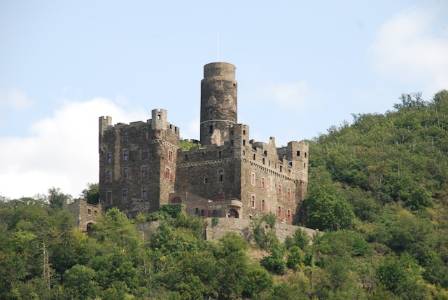
Another triumph—and struggle—was the water mill. Guided by fragments of a twelfth-century mill discovered in eastern France, carpenters spent two years constructing a replica. The first version creaked and jammed, its wooden cogs too brittle. Miller Constantin Lemesle refused to quit. “Mistakes are how we learn,” he says. “If the mill worked perfectly on the first try, we’d have flour but no knowledge.” After a decade of adjustments—replacing pig-fat grease with cow fat, notching cogs to improve grip—the mill finally “sang,” grinding grain as it would have 800 years ago. For archaeologists, the mill revealed more than just engineering: it illuminated the medieval community’s reliance on water power, the seigneur’s role in collecting mill taxes, and how crop production and castle building were intertwined.
Even basic tasks like mixing mortar became revelations. Medieval masons used lime mortar, but the exact ratio of lime, sand, and water had been lost. Guédelon’s team tested dozens of combinations, learning that the mortar’s strength depended on slow curing—up to a year—rather than modern accelerants. “We used to think medieval mortar was weak,” Renucci says. “But when we mixed it the way they did, we found it’s incredibly durable. It bonds with stone over time, making the walls stronger.”
A Living Laboratory: Science and Discovery at Guédelon
Guédelon’s impact extends far beyond its castle walls. It has become a magnet for archaeologists, historians, and scientists eager to study medieval life through hands-on experimentation. Soundscape archaeologist Mylène Pardoën has visited 23 times since 2020, placing microphones in millstones, quarry slabs, and forge fires to record the “sound of the thirteenth century.” Her data helped reconstruct the acoustic environment of Notre Dame Cathedral’s construction site circa 1170—a four-minute surround-sound piece that transports listeners to the medieval building yard.
For Anne Baud, director of excavations at Cluny Abbey (once home to Western Europe’s tallest medieval basilica), Guédelon has upended assumptions about medieval labor. “We used to think hundreds of workers were needed to build a structure like Cluny,” she says. “But at Guédelon, we’ve seen that medieval teams were leaner, more collaborative, and highly synchronized. They didn’t just follow orders—they problem-solved together.” This insight has reshaped how archaeologists interpret labor practices at sites across Europe.
The project has also shed light on forgotten technologies. Masons at Guédelon have mastered four styles of medieval ceiling vaults, all without iron or concrete reinforcement. Carpenters have learned that green (freshly cut) oak is more pliable than dried timber, a discovery that challenged conventional wisdom about medieval construction. Blacksmiths have revived techniques for forging tools and nails, using iron extracted from local ore—a process that revealed how medieval metalworkers adapted to available resources.
“Guédelon is unique because it’s a controlled experiment,” says Faucherre, a member of the project’s scientific committee. “We can test hypotheses about how medieval builders worked, then observe the results in real time. Every stone laid, every tool forged, every window hung adds to our understanding of the past.”
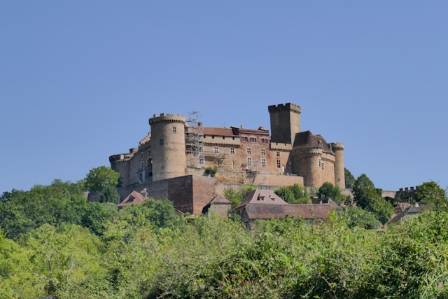
From Castle to Cultural Legacy
What began as an archaeological experiment has evolved into a cultural phenomenon. Guédelon’s artisans have become experts in medieval craftsmanship, and their skills are now in demand for restoration projects across France. When Notre Dame Cathedral burned in 2019, Renucci and six Guédelon carpenters were summoned to help rebuild the “Forest”—the cathedral’s massive timber roof. They shared their knowledge of working with green oak and provided 60 hand-forged medieval axes, proving that Guédelon’s experimental methods had practical applications for preserving heritage.
The castle has also become a vital part of the local community. It employs residents, draws tourists to the rural Puisaye region, and offers educational programs that teach children about medieval history through hands-on activities. “Guédelon isn’t just a tourist attraction,” Martin says. “It’s a place where people connect with the past—where schoolkids can watch a blacksmith forge a nail, or a mason carve stone, and understand how things were made before machines.”
As the project enters its third decade, there is no end in sight—and that’s by design. Guédelon was never meant to be “finished” in the modern sense; it is a perpetual work in progress, evolving as new discoveries are made. Plans are underway for a medieval village adjacent to the castle, complete with a church modeled on nearby Moutiers-en-Puisaye’s twelfth-century church, whose wall paintings inspired Lachény’s decorative work.
For Renucci, the magic of Guédelon lies in its ability to make the medieval world tangible. “We forget that the Middle Ages were colorful, noisy, and full of ingenuity,” he says. “People weren’t just surviving—they were creating, problem-solving, and building something that would last. That’s what we’re doing here too.”
Standing atop Guédelon’s curtain wall, with the forest stretching to the horizon and the clang of a blacksmith’s hammer echoing below, it’s easy to see why. The castle is more than a structure of stone and wood; it’s a bridge between eras, a reminder that the past is not just something to be excavated—it’s something to be lived, tested, and rediscovered.
यह भी पढ़ें

Finding Out the Global Population of White Rhinos
Natalie Foster

दुनिया के 10 सबसे खतरनाक जानवर
काव्या

अपने टेनिस गेम को बेहतर बनाने के लिए दस त्वरित टिप्स
आदित्य

Secrets to Growing Vibrant Gardenias at Home
Paul Andrew Harris

15 Types of Monkeys Climbing Trees All Around the World
Brooke Simmons

The Definitive Guide to Women’s Athletic Apparel: Merging Fashion, Ease, and Utility
Eleanor Faith Donovan