← मुखपृष्ठ1 मिनट का पाठ
विशेष लेख
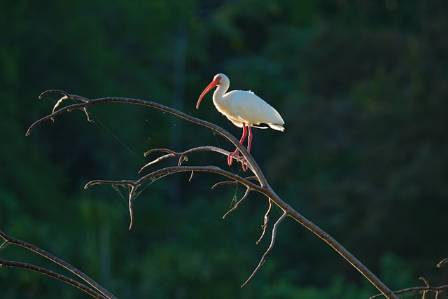
The White Ibis (Eudocimus albus)
Size: about 23–27 inches long (58–69 cm) with a wingspan up to ~97 cm.
M
Mia Harris
लेखक
लेख परिचय
नीचे पूरा लेख पढ़ें।
अनुभाग
समाचार
Key Characteristics & Identification
Size: about 23–27 inches long (58–69 cm) with a wingspan up to ~97 cm.
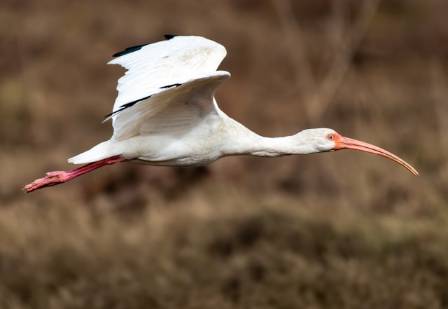
Colors: Adults are all white with red face, bill, and legs, and black wingtips. Juveniles are brown above and white below; their bills & legs are pink/red but duller.
Bill shape: Long, down-curved (decurved) bill, used for probing in shallow water or mud.
Habitat & Range
Found in the southeastern United States, especially populous in Florida.
Lives in shallow wetlands: freshwater marshes, salt marshes, mangroves, flooded fields, mudflats. Also along coasts, ponds, rivers.
Some populations migrate or move seasonally; winters see reduced numbers in northern portions of their range.
Behavior & Diet
Foraging: Walks slowly in shallow water, sweeping bill side to side and probing for prey. Also forages on land in mud or short grass.
Diet: Crustaceans (e.g. crayfish, crabs), insects, snails, frogs, small fish, marine worms.
Social structure: Highly social; feed, roost, and nest in flocks/colonies. Nesting often in trees, shrubs or mangroves above water. Both male and female contribute to nest building and care.
Reproduction & Development
First breeding usually at ~2 years of age.
Clutch size: 2–3 eggs (sometimes up to 5).
Incubation: about 21 days. Both parents involved in incubation.
Young: After hatching, chicks are fed by regurgitation. They can move about after a few weeks, start flying (short flights) around ~4-5 weeks, and are more independent by ~6-7 weeks.
Conservation & Threats
Status: Least Concern on a global scale.
Threats: Loss of feeding and nesting habitat (e.g. wetlands, mangroves), especially due to development and alteration of water regimes. Also sensitive to changes like declines in freshwater sources which are important for young.

यह भी पढ़ें
en
How Graffiti Shaped Urban Culture
Zoe Harper

en
Trams: A Modern Answer to Sustainable Urban Transport
Hannah Louise Scott
hi
8 बेकरियां लंदन के सर्वश्रेष्ठ क्रोइसैन के लिए यात्रा करने के लिए
एलेनोर एक्विटाइन

hi
फाल्कन हेवी, गरजते हुए बादल में, स्पेसएक्स की महत्वाकांक्षा को कक्षा में ले जाता है
आर्यन
hi
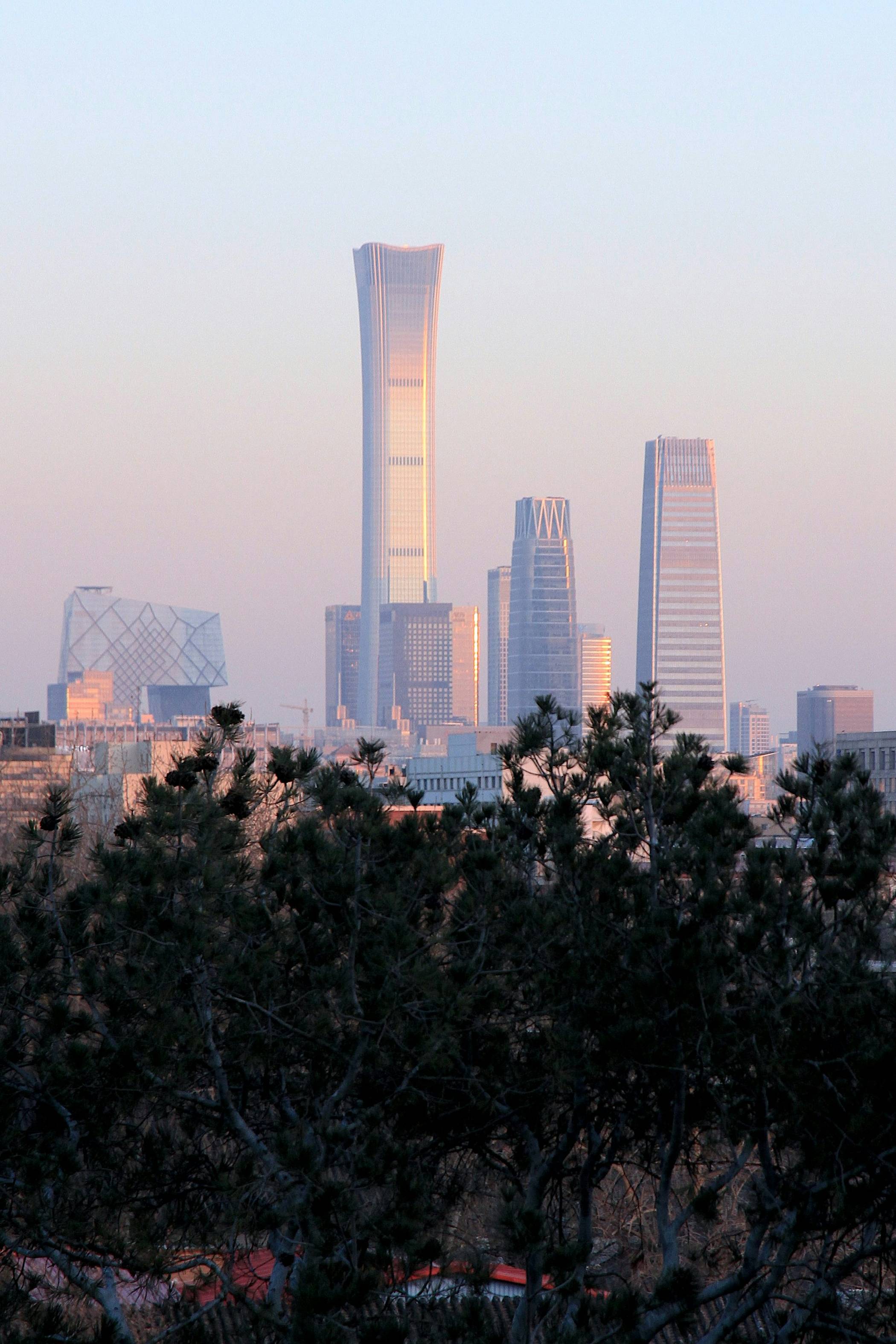
सबसे ऊंची इमारतें
यश

hi
दिल्ली के कुतुब मीनार के बारे में 5 रोचक तथ्य
मधुर