विशेष लेख
Robots Explore Beneath Arctic Sea Ice
Less than 200 miles from the North Pole, deep in the Arctic Ocean, the German research icebreaker Polarstern remains locked within thick sea ice, surrounded by near-total darkness. In this remote and frozen environment, researchers occasionally leave the safety of the ship to work outside in extreme cold, navigating drifting ice, powerful winds, and the constant risk of polar bears—especially during the long polar night when the Sun disappears for months.
Tyler Hughes
लेखक
लेख परिचय
नीचे पूरा लेख पढ़ें।
अनुभाग
समाचार
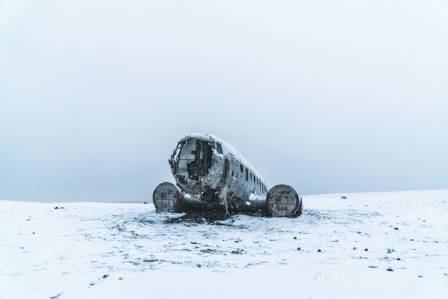
Less than 200 miles from the North Pole, deep in the Arctic Ocean, the German research icebreaker Polarstern remains locked within thick sea ice, surrounded by near-total darkness. In this remote and frozen environment, researchers occasionally leave the safety of the ship to work outside in extreme cold, navigating drifting ice, powerful winds, and the constant risk of polar bears—especially during the long polar night when the Sun disappears for months.
Their mission is to operate a robotic underwater vehicle that can explore the unseen world beneath the ice. This work is part of the massive MOSAiC expedition, a year-long scientific journey that turns the drifting ice itself into a moving research station. As the Polarstern slowly drifts across more than 1,500 miles of the central Arctic Ocean, teams of scientists rotate in and out, collecting continuous data on ocean conditions, ice behavior, weather, and ecosystems.
Life and work in this region are extremely demanding. Winter temperatures can drop to minus 50°F, and the absence of sunlight can last nearly half a year. Researchers must also deal with shifting ice sheets that can break apart without warning, scattering camps and equipment across the frozen sea. Safety systems, including infrared monitoring and patrol teams, are required due to frequent polar bear encounters.
At the center of the project is a compact, sensor-equipped underwater robot that is lowered through openings in the ice. Operated remotely from a nearby field tent, it travels beneath the frozen surface, capturing data on light levels, ocean chemistry, biological activity, and even the underside structure of sea ice. Scientists use this information to better understand how the Arctic ecosystem changes through the seasons.
Despite its harsh environment, the Arctic provides valuable scientific insight. Researchers hope that long-term data from the robot will reveal how sea ice, ocean life, and atmospheric systems interact—and how these processes are being reshaped by climate change.
यह भी पढ़ें

Healthy Habits: Fruits and Vegetables as Allies for Weight Management
Mia

13 सर्वश्रेष्ठ डोनट्स, रैंकिंग
विकास

The Eurasian Blue Tit: A Comprehensive Profile
Samuel Bennett
अटलांटिक पफिन
वाणी

Brooklyn Bridge: New York City's Historic Engineering Icon
Clara Ann Young

10 Remarkable Types of Rainbows You’ve Probably Never Seen
Carol